
Quick summary
| Question | Short answer |
|---|---|
| Price from | A few euros DIY by train + SITA bus; ~€25–35 one-way by seasonal ferry; ~€90–150 for organized full-day tours (check current listings on GetYourGuide) |
| Season | Land route year-round; direct Naples ferries roughly April–October |
| Book ahead? | Yes in May–September — small-group tours and morning ferries fill days out |
| Time needed | Full day: 9–10 hours door to door; two towns is the realistic maximum |
| Departure point | Tours: central Naples pickup. Ferries: Molo Beverello. DIY: Circumvesuviana to Sorrento, then SITA bus |
The Amalfi Coast from Naples is close on the map — Positano is barely 50 km away — and stubborn in practice. One narrow road serves the entire coast, it saturates by mid-morning in summer, and the famous towns hang off cliffs with nowhere to put a coach. That's why the how matters more here than on any other day trip in Campania: the same three towns can be a serene day or a traffic sentence depending on the transport you pick.
Minivan tour vs ferry vs SITA bus: the real comparison
| Option | What you get | The catch |
|---|---|---|
| Guided minivan day tour | Hotel-area pickup in Naples, the Sorrento peninsula and Amalfi Drive in an eight-seater that fits where coaches can't, stops in Positano and Amalfi (itineraries vary), a driver who handles the road while you handle the views. This is the standard format. | You share the road with everyone else; summer traffic can eat an hour of your free time. Free time per town is 1.5–2 hours, not an afternoon. |
| Boat tour from Naples | The coast the way it photographs best — from the water — with stops in Positano and Amalfi, drinks on board and usually a swim pause under the cliffs. See the boat-day format. | Season-limited (roughly April–October) and weather-dependent; rough sea can cancel the day. No Ravello — she doesn't do boats. |
| Scheduled ferry (DIY by sea) | Direct seasonal fast ferries from Molo Beverello to Positano and Amalfi, ~1–2 hours. Your day, your pace. Ports, operators and booking are in our Naples ferries guide. | Timetables thin out early evening — respect the last boat. One-way fares add up for a family. |
| Circumvesuviana + SITA bus (DIY by land) | The budget classic: train to Sorrento, blue SITA bus over the hills to Positano and on to Amalfi. Total cost of a pizza. | The reality check below. Cheapest is not the same as easiest. |
The SITA bus reality
Every budget guide recommends the SITA bus; fewer describe a July departure. The queue forms 30–45 minutes before the bus, the bus arrives already half-planned-for, and standing passengers ride the full hairpin sequence to Positano braced between strangers. Drivers are excellent — the experience around them is not. If you go this way: start on the first trains out of Naples, buy bus tickets before boarding (tabaccheria or machines, not the driver), sit on the sea side — that's the right side heading toward Positano and Amalfi — and treat the return schedule as a hard deadline, because full buses skip stops. In shoulder season the same route is genuinely pleasant. In August it's an endurance event.
By land vs by boat
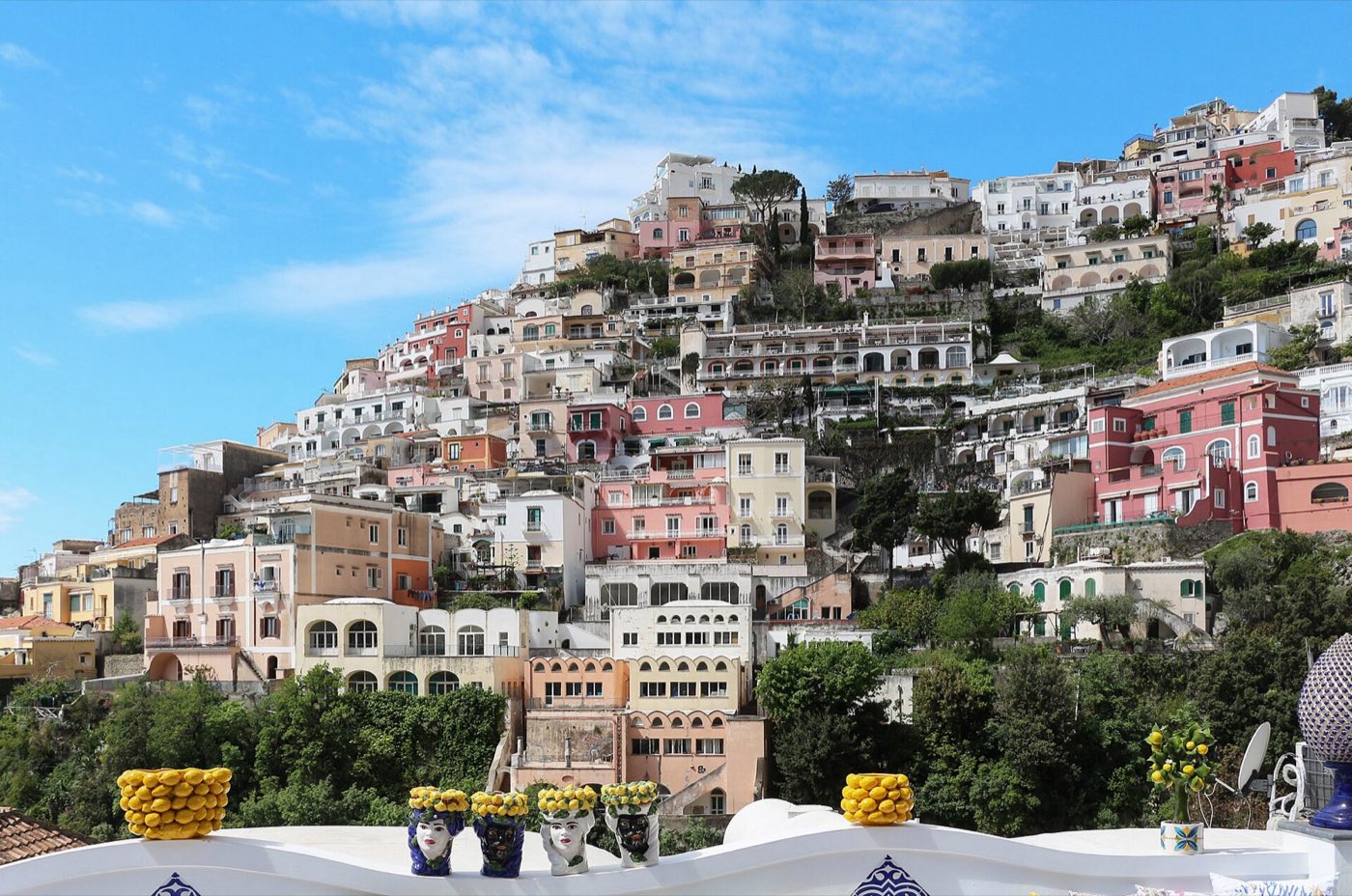
- The view: boat wins, and it isn't close. Positano was built to be admired from the sea; from the road you mostly see the backs of buildings and other traffic. From the deck you get the full amphitheater of cliffs, towers and stacked pastel houses.
- The drama: land wins. The Amalfi Drive (SS163) between Sorrento and Amalfi is one of Europe's celebrated roads — carved galleries, sheer drops, church domes appearing around corners. In a minivan with a professional driver it's a thrill; self-driving it in summer is a parking problem with scenery.
- Flexibility: land wins in winter, when ferries stop; boat wins in summer, when the road jams and the sea route simply sails past the queue.
- Ravello: land only. The coast's loftiest town sits 350 m above Amalfi — reachable by a connecting bus in about 25 minutes — and its Villa Rufolo and Villa Cimbrone gardens are the best reason to choose wheels over hull.
- Swimming: boat wins by definition. Most boat tours build in a swim stop; land itineraries leave you negotiating Positano's busy beach in your free hour.
A note on motion sickness
Be honest with yourself before booking, because both routes move. The road is roughly two hours of continuous hairpins each way; the ferry can roll noticeably when the sea is up, especially rounding Punta Campanella. If you're susceptible: take a motion-sickness tablet 30–60 minutes before departure, sit front-seat in the van or low and central on the boat, watch the horizon rather than your phone, and skip the espresso until you arrive. Counterintuitively, many people who struggle on the winding road are fine on the water — the boat's motion is rhythmic where the road's is not. If both sound grim, our day trips hub has flatter alternatives entirely.
Positano, Amalfi, Ravello — and a word for Praiano
Positano is the image: a wall of ochre and pink houses funneling down to a grey beach lined with orange umbrellas. It's vertical (every wrong turn is a staircase), expensive, and still worth two hours — walk down Via dei Mulini, look back up from the pier, and you've collected the coast's defining view.
Amalfi was a medieval maritime republic that rivaled Venice, and it feels like an actual town rather than a set: the striped Duomo di Sant'Andrea looming over the piazza, the Museo della Carta in a working paper mill upstream, lemon products in every second window. Flatter and cheaper than Positano, better for lunch.
Ravello floats above it all — quieter, greener, aristocratic. The Villa Rufolo terrace (Wagner's inspiration for Klingsor's garden) and Villa Cimbrone's Terrace of Infinity are the two great man-made viewpoints of the coast, and the summer Ravello Festival stages concerts on a platform over the void.
Praiano, halfway between Positano and Amalfi, is the local's counter-suggestion: no ferry dock, no crowds, sunset views that Positano's geography denies it, and honest restaurant prices. Day-trippers rarely stop; if you come back to sleep on the coast, this is the value pick.
Timing is everything
- Best months: May, June, September, early October — ferries running, sea swimmable, road merely busy instead of solid.
- Start early, always. Tours leave Naples around 7:30–8:30 for a reason: the coast road saturates between 10:00 and 16:00 in season. An hour earlier out of Naples is two towns instead of one.
- Positano light: the classic stacked-village shot faces roughly west-northwest, so it glows in late afternoon; mornings give flatter light but emptier lanes.
- Weekdays over weekends, and avoid Italian holidays — Ferragosto week (mid-August) is the single worst time on the SS163.
- Winter: the coast stays open and turns local. No ferries from Naples and shorter days, but Ravello's gardens and Amalfi's Duomo without crowds have their own logic.
How to save on an Amalfi Coast day trip
- Compare the tour price against the DIY total honestly: return ferry fares for two people plus lunch already approaches a group-tour ticket, and the tour includes the transport headache.
- Shoulder-season listings drop noticeably — the same minivan day in October often costs meaningfully less than in July, as listed on GetYourGuide.
- Kids' rates exist on ferries and most tours (brackets vary by operator — check the individual listing).
- Picnic in Positano, lunch in Amalfi. Positano's beachfront restaurants charge for the postcard; Amalfi's side streets are half the price for better pasta.
- Book free-cancellation and watch the forecast. Boat days cancel in rough sea — a flexible ticket lets you swap to a land tour instead of losing the day.
- Multi-day option: if the coast is the point of your whole trip, a packaged multi-day version — this 4-day Amalfi Coast experience is the template — beats stacking day trips, and evenings in Positano after the crowds sail home are the coast at its best. A private tour is the other way to buy back control of the clock.
How to get there from Naples
Organized tours collect you in central Naples (typically near Piazza Garibaldi or your hotel area — the listing specifies) and handle everything from there.
By sea: seasonal fast ferries leave from Molo Beverello, below Castel Nuovo — metro Line 1 to Municipio puts you 3–5 minutes from the gates. Direct boats reach Positano in roughly 1–1.5 hours and Amalfi in up to 2, depending on stops. Book morning departures a few days ahead in summer.
By land: Circumvesuviana train from Napoli Porta Nolana or Napoli Garibaldi to Sorrento (about 65–75 minutes), then the SITA bus onward — roughly 50 minutes to Positano and another 40–50 to Amalfi, traffic permitting. For Ravello, change in Amalfi. Full regional logistics live in our getting around guide.
Don't rent a car for this. Summer parking in Positano is scarce and brutally priced, and stretches of the coast run one-way alternating traffic at peak times. The one vehicle worth hiring here comes with a driver.
Amalfi Coast vs the other day trips
Choosing between the big three: Capri is the island-glamour day, Pompeii and Vesuvius is the history day, and the Amalfi Coast is the villages-and-views day — the most scenery per hour of any of them, and the most transport-sensitive. Many first-timers do coast plus Pompeii; sea-lovers pair it with Capri or a gulf boat tour. If pastel harbors without the price tag appeal, Procida delivers a pocket version 40 minutes from Naples.
FAQ: Amalfi Coast from Naples
Can you do the Amalfi Coast as a day trip from Naples?
Yes. A guided minivan tour or a direct seasonal ferry gets you to Positano and Amalfi and back in a long day (roughly 9–10 hours). What you can't do comfortably in one day is all three famous towns plus swimming plus lingering — pick two towns and enjoy them.
Is it better to see the Amalfi Coast by land or by boat?
By boat you get the postcard view — the towns stacked up the cliffs are designed to be seen from the water — plus no traffic and often a swim stop. By land you get Ravello, the mountain-road drama and winter access. First visit in ferry season: boat. Off-season or Ravello lovers: land.
Is there a direct ferry from Naples to Positano or Amalfi?
In season (roughly April–October) direct fast ferries run from Molo Beverello in Naples to Positano and Amalfi, taking about 1–2 hours depending on stops and sea state. In winter they stop, and the land route via Sorrento becomes the only public-transport option.
How do you get to the Amalfi Coast by public transport?
Circumvesuviana train from Naples to Sorrento (about 65–75 minutes), then the SITA bus over the hills to Positano and Amalfi. It's the cheapest route, but summer queues at Sorrento station can mean standing for the whole winding ride — start very early.
How much does an Amalfi Coast day trip from Naples cost?
DIY by train and SITA bus costs only a few euros each way. Seasonal ferries from Naples run roughly €25–35 one-way. Organized full-day tours by minivan or boat typically list at around €90–150 per person on GetYourGuide, depending on season and inclusions — always check the current listing.
What if I get motion sickness?
Know that both routes move: the Amalfi Drive is two hours of hairpin bends, and the ferry can roll when the sea is up. If you're susceptible, take a tablet 30–60 minutes before departure, sit low and central on the boat or up front in the van, and fix your eyes on the horizon. Many people who suffer on the road do fine on the water.
Positano, Amalfi or Ravello — which should I prioritize?
Positano for the iconic stacked-village look and beach scene; Amalfi for the cathedral, the paper museum and a real working town; Ravello for gardens, music and the best high views on the coast. In one day, Positano plus Amalfi is the natural pair; Ravello deserves its own unhurried half day.
Is one day enough for the Amalfi Coast?
Enough to understand the fuss, not enough to exhaust it. A day trip covers two towns and the coastal views. If the coast is a main reason for your trip, consider a multi-day version or an overnight in Positano or Praiano and see it after the day-trippers leave.
The Amalfi Coast from Naples comes down to one honest question: do you want to ride the famous road or look at the famous cliffs? Pick the boat in season and the minivan otherwise, start early, cap the day at two towns, and the coast delivers exactly what the photographs promised — which, around here, is a high bar.