
Quick summary
| Question | Short answer |
|---|---|
| Price from | Site entries roughly €5–15 each (check official sites); organized day tours from ~€60 to €150+ per person depending on distance and group size |
| Season | Year-round; Paestum and Oplontis are open-air, so spring and autumn beat August heat |
| Book ahead? | Padre Pio tours yes (small-capacity, long day); the archaeological sites rarely sell out |
| Time needed | Oplontis/Portici: half day. Paestum: full day. San Giovanni Rotondo: 10–12 hours |
| By train? | Paestum, Oplontis and Portici yes; Padre Pio realistically only by car or tour |
These excursions from Naples solve a specific problem: the second visit, the fifth day, or the traveler who has already seen the headline sites and wants substance without the coach-park crowds. None of them are consolation prizes. Paestum would be the top attraction of most Italian regions; Oplontis has frescoes Pompeii can't match; Portici explains where Naples' great museum came from; and San Giovanni Rotondo draws millions of pilgrims a year. What they need from you is honesty about time — two are half days, two eat the whole day.
The four trips compared: when each is worth a day
| Excursion | What it is | Time & when it's worth it |
|---|---|---|
| Paestum | Three monumental Doric temples from the Greek colony of Poseidonia (6th–5th century BC), city walls, and a museum holding the famous Tomb of the Diver fresco. South of Salerno, in buffalo-mozzarella country. | Full day (~1.5 h each way). Worth it if ancient architecture moves you — these temples outclass most of what stands in Greece. Skip if one Pompeii-sized dose of antiquity per trip is enough. |
| Oplontis (Villa Poppaea) | A sprawling imperial villa in Torre Annunziata attributed to Poppaea Sabina, Nero's second wife — buried in AD 79, now a UNESCO-listed site with some of the finest second-style frescoes anywhere. See Oplontis tickets and tours. | Half day (~40 min by Circumvesuviana). Worth it for fresco lovers and Pompeii veterans; often nearly empty. Pairs perfectly with Pompeii or Herculaneum in one day. |
| Royal Palace of Portici | The Bourbon palace built by Charles III at the foot of Vesuvius, first home of the Herculaneum treasures (the Herculanense Museum) before they moved to the MANN. Today: university, restored royal apartments, botanical gardens. See Portici-area tours. | Half day (~20–30 min by train). Worth it for Bourbon-history completists — the natural sequel to Caserta and the MANN. Combine with Herculaneum, two stops down the line. |
| Padre Pio sanctuary | San Giovanni Rotondo in Puglia's Gargano: the tomb and friary of Saint Pio of Pietrelcina, the modern Renzo Piano-designed pilgrimage church, and one of the most visited Catholic shrines in the world. Private day tours run from Naples. | Very full day (~2.5–3 h drive each way, 10–12 h total). Worth it when the pilgrimage is the point — for devotees this is the trip; for everyone else it's a lot of motorway. |
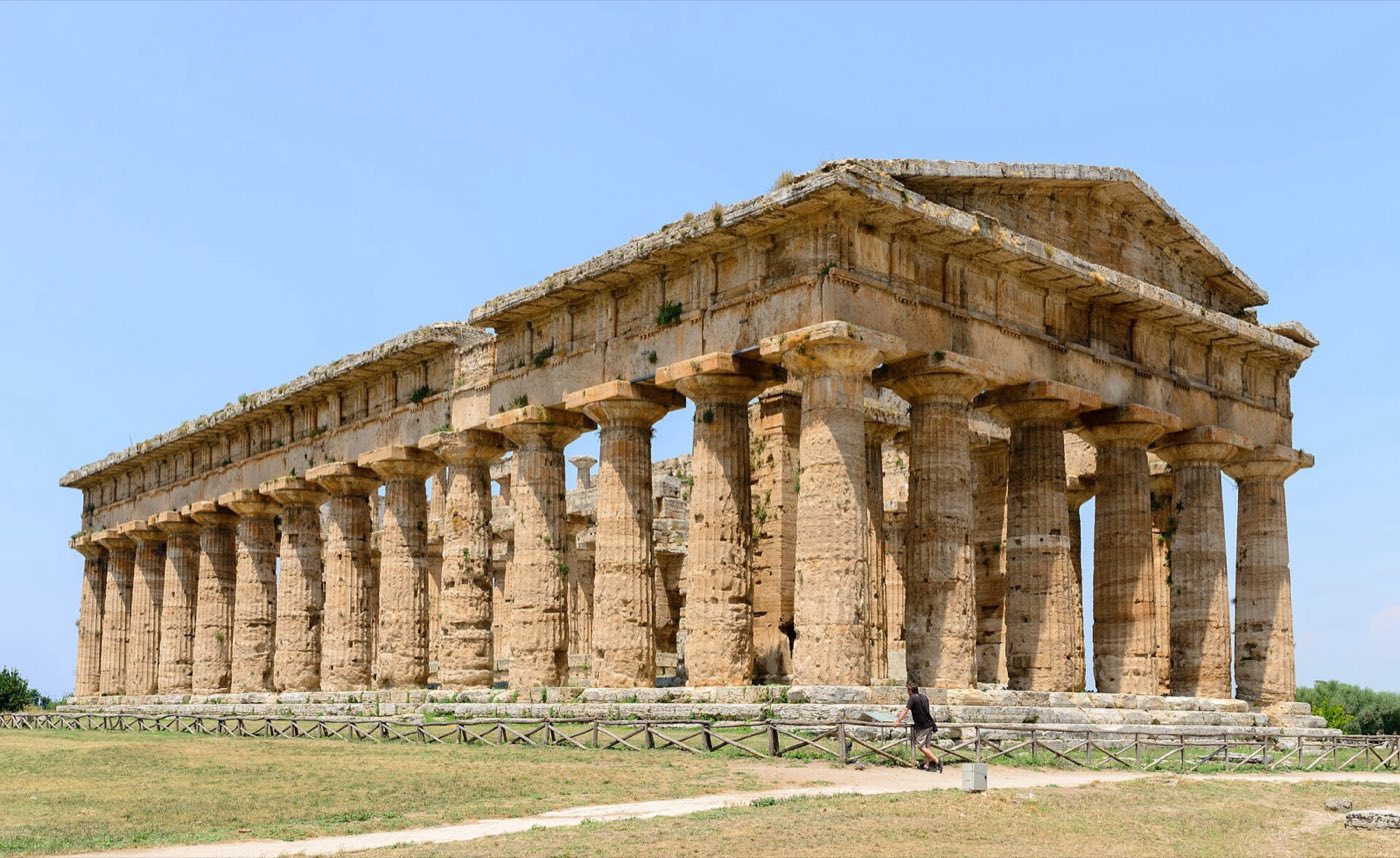
Paestum in practice
Give the site 2–3 hours and the National Archaeological Museum another hour — the Tomb of the Diver alone, the only surviving Greek figural tomb painting of its era, justifies the museum ticket. Entry to site plus museum has recently been in the €10–15 range depending on season (check the official Paestum park website). Summer visits: go early or late, there is almost no shade among the temples. The area's other export is mozzarella di bufala — several organized tours pair the temples with a buffalo-farm visit and tasting, which turns an archaeology day into a very good general-interest day.
Oplontis and Portici: the Vesuvian half-days
Both sit on the Circumvesuviana/regional rail lines between Naples and Sorrento, which makes them the easiest DIY trips on this page. Villa Poppaea is a five-minute walk from Torre Annunziata's station: one enormous villa with its pool, gardens and wall paintings in situ, typically visited in 60–90 minutes with a fraction of Pompeii's foot traffic. Entry has recently been under €10 (check the official Pompeii sites network for current tickets and combined formulas). Portici is closer still: palace apartments, the Herculanense Museum display and the botanical garden of the university's agriculture faculty — a modest ticket, and a story that connects directly to the MANN's collections, which began life here. Stack either with Herculaneum for a full Vesuvian day without ever entering Pompeii's turnstiles.
Timing is everything
- Paestum: arrive at opening (typically 8:30–9:00) or after 15:30 in summer — the temples give no shade. Golden hour turns the limestone honey-colored; photographers should stay late.
- Oplontis: weekday mornings are near-private. Closed days and hours follow the Pompeii park network — verify before traveling.
- Portici: apartments run on limited visiting hours, often mornings — check the university's Centro Musei pages before you go.
- San Giovanni Rotondo: major feast days (especially around September 23, St. Pio's feast) mean huge crowds — moving experiences for pilgrims, gridlock for everyone else. Tours leave Naples around 7:00; sleep first.
- All four are low-season friendly: these are the day trips that stay pleasant in November when Capri boats stop running.
How to save
- Regional trains are the bargain — Naples to Paestum costs a fraction of any tour; check Trenitalia fares and buy the regional (not IC) ticket.
- Combined Vesuvian tickets: the Pompeii park network periodically offers multi-site formulas covering Oplontis and other sites — as listed on the official park website, they beat single entries if you're doing two or more.
- First-Sunday free entry applies to Italian state sites like Paestum and Oplontis on the first Sunday of each month — free but crowded; decide which you value.
- EU youth discounts: 18–25s pay a reduced state-site rate and under-18s enter free with ID, per standard Italian museum rules.
- Share the Padre Pio car. The private tour price is per vehicle on many listings — four pilgrims splitting it changes the math completely. Compare with other private tour formats if your group has its own itinerary in mind.
- Check the Artecard — some versions of the Campania-wide pass include Paestum and Vesuvian sites; our city pass guide runs the numbers.
How to get there
- Paestum: direct regional trains from Napoli Centrale toward Sapri/Cosenza stop at Paestum station, roughly 1 h 20 min–1 h 40 min; the site is a 10–15 minute walk from the station. By car, about 1.5 hours via the A2.
- Oplontis: Circumvesuviana from Napoli Porta Nolana/Garibaldi toward Sorrento or Poggiomarino to Torre Annunziata (~35–45 min), then a short signposted walk.
- Portici: Circumvesuviana or metro Line 2/regional rail to Portici-Ercolano (~20–30 min), then a short uphill walk to the palace complex.
- San Giovanni Rotondo: ~2.5–3 hours by car via the A16; no practical direct rail link. Organized and private tours include hotel pickup, which on a 10–12 hour day is worth real money.
For general train, metro and ticket practicalities, see the getting-around guide; if you're weighing these against the classics, the day trips hub compares everything from Amalfi to Caserta in one place.
FAQ: excursions from Naples
Is Paestum worth a day trip from Naples?
Yes, if ancient architecture is your thing — its three Doric temples are among the best-preserved Greek temples anywhere, better preserved than most in Greece itself. Count on a full day: roughly 1.5 hours each way by train or car, plus 3–4 hours for the site and museum.
What is Oplontis and how is it different from Pompeii?
Oplontis, in modern Torre Annunziata, preserves Villa Poppaea — a vast imperial villa linked to Nero's wife, buried by the same AD 79 eruption as Pompeii. It's one building instead of a city: spectacular frescoes, a fraction of the crowds, and 1–2 hours is enough.
Can you combine Oplontis with Pompeii in one day?
Easily — they are two stops apart on the Circumvesuviana railway. Do Pompeii in the morning (3–4 hours), then Oplontis in the early afternoon (1–2 hours). Combined tickets covering the Vesuvian sites are available; check the official park website for current formulas.
How do I get to the Padre Pio sanctuary from Naples?
San Giovanni Rotondo is in the Gargano area of Puglia, roughly a 2.5–3 hour drive each way. There is no practical direct train, so pilgrims choose a private or organized day tour with hotel pickup, or an overnight stay. Expect a long day of about 10–12 hours.
What is special about the Royal Palace of Portici?
It's the Bourbon palace where the first Herculaneum finds were kept — effectively the ancestor of the Naples Archaeological Museum. Today it houses a university, the Herculanense Museum display and botanical gardens. It's a half-day visit, easily paired with Herculaneum itself.
Are these excursions doable by public transport?
Paestum, Oplontis and Portici, yes: regional trains reach Paestum from Napoli Centrale, and the Circumvesuviana serves Oplontis and Portici. San Giovanni Rotondo is the exception — without a car, an organized tour is the realistic option.
Which of these day trips should I choose if I only have one spare day?
Pick by interest: Paestum for Greek temples and mozzarella country, Oplontis if you want AD 79 frescoes without Pompeii's crowds (it only takes half a day), Portici for Bourbon history, San Giovanni Rotondo if the pilgrimage itself is the point.
The excursions from Naples beyond the big five are where the region shows its depth: an empty imperial villa, temples older than the Parthenon, a palace that birthed a museum, and a sanctuary that moves millions. Match the trip to your interest and your remaining energy, book the long ones properly, and take the train for the short ones — that's the whole strategy.