
Quick summary
| Question | Short answer |
|---|---|
| Price from | Gaiola beach free (reservation required); guided snorkeling/kayak roughly €15–40; Baia glass-bottom boat about €15–25; Anfiteatro Flavio a few euros (check official sites and GetYourGuide for current prices) |
| Season | Sea activities roughly May–October; archaeology year-round |
| Book ahead? | Yes — Gaiola's free slots and summer weekend boat trips go days in advance |
| Time needed | Half a day for Gaiola; half a day for Pozzuoli + Baia; a full day for both, rushed |
| Getting there | Metro Line 2 or Cumana railway to Pozzuoli/Baia; bus + walk for Gaiola |
The Campi Flegrei — the Phlegraean Fields, literally "burning fields" — are a volcanic caldera stretching west from Naples through Pozzuoli to Cuma. The ground here rises and falls over decades, a phenomenon called bradyseism, which is why Roman ruins sit both above your head and below your flippers. Three stops justify the trip: the Gaiola underwater park just off Posillipo, the sunken archaeological park of Baia, and the Anfiteatro Flavio in Pozzuoli. All three are doable on public transport, and none suffers the crowds of Pompeii.
Gaiola, Baia or Pozzuoli: which Campi Flegrei tour fits you
| Option | What you get | Best for |
|---|---|---|
| Gaiola free beach | A pocket-sized cove facing the two Gaiola islets, inside the marine protected area. Free, capped numbers, reservation required on the official park site. | Swimmers on a budget who plan ahead. Pair it with our Naples beaches guide for backup spots. |
| Gaiola guided snorkeling / kayak | Small-group outings run from the park's visitor center over submerged villa walls and quays; kayak routes hug the Posillipo coast. See Gaiola area experiences. | Anyone who wants the ruins explained, not just glimpsed. The guided version sees far more than the free beach. |
| Sunken Baia by boat or mask | Glass-bottom boat (no wetsuit needed), snorkeling or scuba over the submerged villas, mosaics and statue casts of ancient Baiae. Compare sunken Baia tours. | History-first visitors; the glass-bottom boat works for kids and non-swimmers year-round, sea permitting. |
| Anfiteatro Flavio + Pozzuoli | Rome's engineering minus Rome's lines: the amphitheater's underground level is remarkably intact. Anfiteatro Flavio tickets and tours. | Archaeology fans, rainy-day planners, anyone amphitheater-curious who has already done the Naples underground. |
How the Gaiola free-entry reservation works
This trips up almost everyone, so here it is plainly. The Gaiola beach sits inside a marine protected area managed by a non-profit research center, and access is free but capped: a limited number of visitors per morning and afternoon slot, every day. You reserve your slot on the official park website (Area Marina Protetta Parco Sommerso di Gaiola), where slots are released a few days ahead. In July and August they vanish within hours of release — set a reminder and book the moment your dates open. Show up without a reservation on a summer weekend and the steward at the gate will politely turn you away.
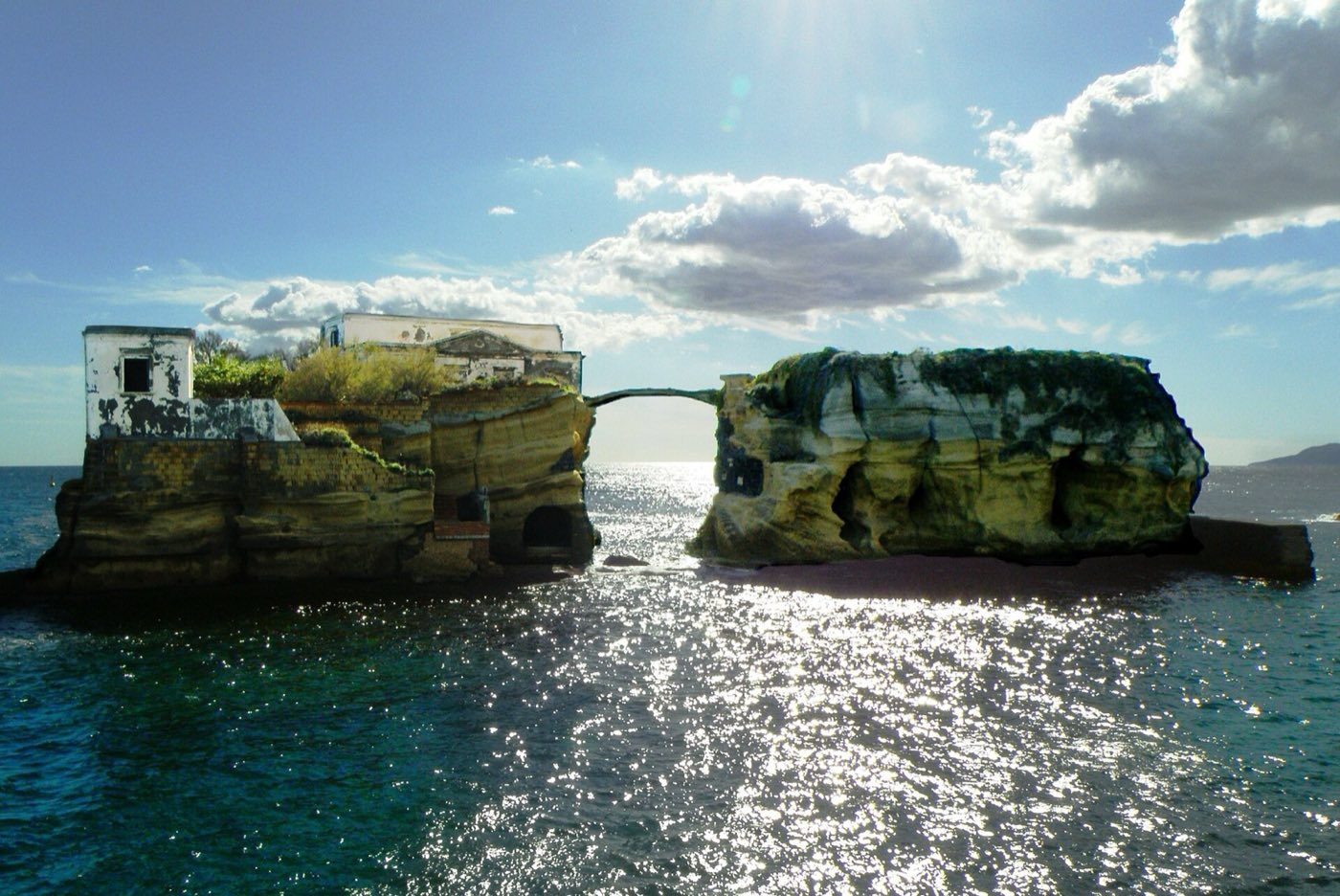
What's actually under the water? The seabed around the two islets holds the remains of the grand villa attributed to the Roman knight Vedius Pollio — quays, fishponds and walls slowly lowered beneath the surface by bradyseism. Above water, the ruins of coastal villas dot the cliff walk down through the Gaiola park, one of the best short walks in the city.
Sunken Baia: the underwater Pompeii
In Roman times Baiae was the empire's most notorious resort — emperors, thermal pools and scandal in roughly equal measure. Bradyseism dropped its lower town several meters below sea level, and today the Parco Archeologico Sommerso di Baia protects streets, villa floors and nymphaeum statuary you can float directly above. Visits leave from Baia's small harbor in three formats: glass-bottom boat (about an hour, no gear, roughly €15–25 as listed on GetYourGuide), guided snorkeling over the shallower structures, and scuba dives for certified divers. The statues you'll see underwater are faithful casts — the recovered originals live in the Archaeological Museum of the Campi Flegrei inside the Aragonese castle above the bay, worth an hour if you're already there. More museum time? See our Naples museums guide.
Pozzuoli: the Anfiteatro Flavio and the honest word on Solfatara
The Anfiteatro Flavio is the third-largest Roman amphitheater in Italy, built under the Flavian emperors by — tradition holds — the same crews who raised the Colosseum. Its party trick is the underground level: an almost complete service basement of corridors, cage bays and trapdoor shafts, better preserved than Rome's because nobody quarried it. Entry costs just a few euros according to the official Campi Flegrei archaeological park, and combined tickets often bundle Baia castle and Cuma. Ten minutes away, the harborside Macellum (the so-called Temple of Serapis) shows bradyseism in stone: its columns are ringed by borings from marine mollusks that lived there when the ground sat below sea level.
And the Solfatara, the steaming crater that headlined every Campi Flegrei guidebook for a century? Be aware: it has been closed to visitors since 2017, after a fatal accident, with no reopening announced. Any listing promising to walk you onto the crater floor is out of date. You can still smell the sulfur and spot steam from around Pozzuoli, and honest local guides frame the area's volcanology from outside the fence.
Timing is everything
- Sea window: late May to early October for snorkeling and kayak; the water is clearest in June and September, before and after peak boat traffic.
- Gaiola slots: weekday mornings are the easy wins; summer weekends are the lottery. Book the moment slots open on the official site.
- Baia boats: visibility drops after storms — if a swell just passed, shift your glass-bottom trip a day or two.
- Archaeology in the heat: the Anfiteatro Flavio has little shade; go before 11:00 in summer, or save it for a cloudy day.
- Photos: late afternoon flatters the Gaiola islets from the Posillipo cliff path; morning light is best inside the amphitheater's arena.
How to save west of Naples
- The headline act is free. Gaiola beach costs nothing but foresight — reserve early and bring your own mask.
- Check combined Campi Flegrei tickets covering the amphitheater, Baia castle museum and Cuma; the bundle usually beats single entries (verify current terms on the official park site).
- Artecard holders: several Campi Flegrei sites participate in the Campania Artecard circuit — see our city pass guide before buying anything separately.
- Take the train, not a taxi. Metro Line 2 and the Cumana cost pocket change; a cab to Baia does not.
- Glass-bottom beats scuba for most people. Unless you're certified and keen, the boat shows you the sunken city for a fraction of a dive's price.
How to get there
Gaiola: from Piazza Vittoria or Riviera di Chiaia, take a bus toward Capo Posillipo (the 140 runs the coast road), get off near Discesa Gaiola and walk 10–15 minutes downhill to the park gate. There's no parking to speak of — don't drive. Pozzuoli: metro Line 2 from Napoli Centrale or Mergellina, or the Cumana railway from Montesanto; either way roughly 20–35 minutes, then a 10-minute walk to the Anfiteatro Flavio. Baia: Cumana to Fusaro then a short bus or 15-minute walk to the harbor. If you're stringing all three together with limited time, a private tour with a driver is the only way it stops being a logistics exercise — or see the day trips hub for organized alternatives.
FAQ: Gaiola, Baia and the Campi Flegrei
Is Gaiola beach free to enter?
Yes. Access to the small beach inside the Gaiola protected area is free, but numbers are capped, so you must reserve a morning or afternoon slot in advance on the official park website. Slots are limited each day and disappear fast in summer.
Can you snorkel over Roman ruins at Gaiola?
Yes — guided snorkeling, kayak and glass-bottom boat tours run by the park's visitor center take you over submerged Roman walls, quays and the remains of coastal villas. Swimming from the free beach is allowed in the designated zone, but the best ruins are seen on a guided outing.
What is the sunken city of Baia?
Baia (ancient Baiae) was a Roman resort town whose lower quarters sank below sea level due to bradyseism, the slow rise and fall of the ground in the Campi Flegrei. Its villas, mosaics and statues now sit a few meters underwater and are visited by glass-bottom boat, snorkeling or scuba from Baia's harbor.
Is the Solfatara crater open to visitors?
No. The Solfatara has been closed to the public since 2017 following a fatal accident, and there is no announced reopening date. You can still see steam rising from the area from various points around Pozzuoli, but you cannot walk on the crater floor.
How do I get to Pozzuoli and the Anfiteatro Flavio from Naples?
Take metro Line 2 from Naples to Pozzuoli, or the Cumana railway from Montesanto station; both take roughly 20–35 minutes. The Anfiteatro Flavio is about a 10-minute walk from either Pozzuoli station.
How much does the Anfiteatro Flavio cost?
Entry is inexpensive — typically a few euros, and it is often included in combined Campi Flegrei archaeological tickets covering Baia castle and Cuma (check the official Campi Flegrei archaeological park site for current prices).
Is one day enough for Gaiola and the Campi Flegrei?
For one of the two, yes. Gaiola plus Posillipo fills a relaxed half day; Pozzuoli, Baia and the amphitheater fill another. Combining both into a single day is possible in summer but rushed — pick swimming or archaeology as the priority.
The Campi Flegrei and Gaiola reward the small amount of homework they demand: one free reservation, one train ticket, one honest acceptance that the Solfatara is off the menu. Do that and you get Roman ruins under your snorkel mask and an amphitheater without a queue — twenty minutes from a city where everything else has one.