
Quick summary
| Question | Short answer |
|---|---|
| Price from | ~€18–22 Pompeii entry, ~€10–12 Vesuvius park entry (check official sites); guided day tours with train and entry typically ~€70–130 on GetYourGuide |
| Hours | Pompeii roughly 9:00–19:00 in summer, shorter in winter; Vesuvius trail closes earlier — verify on the official sites before you go |
| Book ahead? | Yes — Pompeii uses timed entry and summer slots sell out; Vesuvius crater tickets are capped daily |
| Time needed | Pompeii alone: half a day. Pompeii + Vesuvius combo: 8–9 hours door to door |
| Getting there DIY | Circumvesuviana train to Pompei Scavi (~35–40 min); Ercolano Scavi + shuttle for Vesuvius |
Pompeii and Vesuvius from Naples are so close — the ruins are about 25 km down the coast, the volcano looms over the whole gulf — that the trip looks trivial on a map. In practice, the day has real logistics: timed entry tickets, a commuter train with no air conditioning guarantee, a crater road that regular trains don't reach, and a site so large that most unguided visitors walk past the best houses without knowing it. Sort out three decisions before you go — guided or DIY, Pompeii or Herculaneum, ruins only or ruins plus crater — and the day runs smoothly.
DIY by Circumvesuviana train vs guided tour
| Option | What you get | Best for |
|---|---|---|
| DIY by Circumvesuviana | Cheap regional train from Napoli Porta Nolana / Napoli Garibaldi to Pompei Scavi – Villa dei Misteri (~35–40 min, a few euros each way). You buy site tickets yourself and explore with a map or audio app. | Budget travelers and repeat visitors. Total independence; total responsibility for tickets, timing and navigation. |
| Guided Pompeii tour with train & entry | Meet in Naples, travel out together, skip the ticket line with pre-booked timed entry, and get ~2 hours of guided context inside the site. This train-included format is the sweet spot on price. | First-timers who want the history explained without paying minivan prices. Pompeii without a guide is a lot of very similar rubble. |
| Combo tour: Pompeii + Vesuvius | Coach or minivan handles the awkward ruins-to-crater transfer, entries usually included for both sites, often lunch or wine-tasting on the volcano's slopes. Browse Vesuvius tours and crater tickets. | Anyone doing both in one day. The Pompeii–crater link is the weakest part of the DIY chain, and combos delete it. |
| From Rome | Long day (12+ hours) combining Pompeii and Naples with lunch, transport from central Rome included. See the Rome day-tour format, or compare with doing it yourself via our Rome to Naples guide. | Travelers based in Rome who won't otherwise make it south. |
Pompeii vs Herculaneum, honestly
Both cities died in the same eruption of Mount Vesuvius in 79 AD, and both sit on the same Circumvesuviana line — and the right choice is less obvious than the visitor numbers suggest.
Pompeii is the full Roman city: some 44 excavated hectares of streets, temples, bakeries, baths, the forum, a 20,000-seat amphitheater and the famous plaster casts. The scale is the point — nowhere else can you walk an entire ancient town for hours. The scale is also the problem: it's exposed, shadeless, crowded near the entrances and exhausting by mid-afternoon.
Herculaneum (Ercolano) is maybe a quarter of the size, but it was buried deeper, in a different way, so preservation is dramatically better: carbonized wooden beams, staircases, furniture, mosaics still in place, two-story houses you can actually enter. It sits in a compact pit below the modern town, takes about two hours, has more shade, and gets a fraction of Pompeii's crowds.
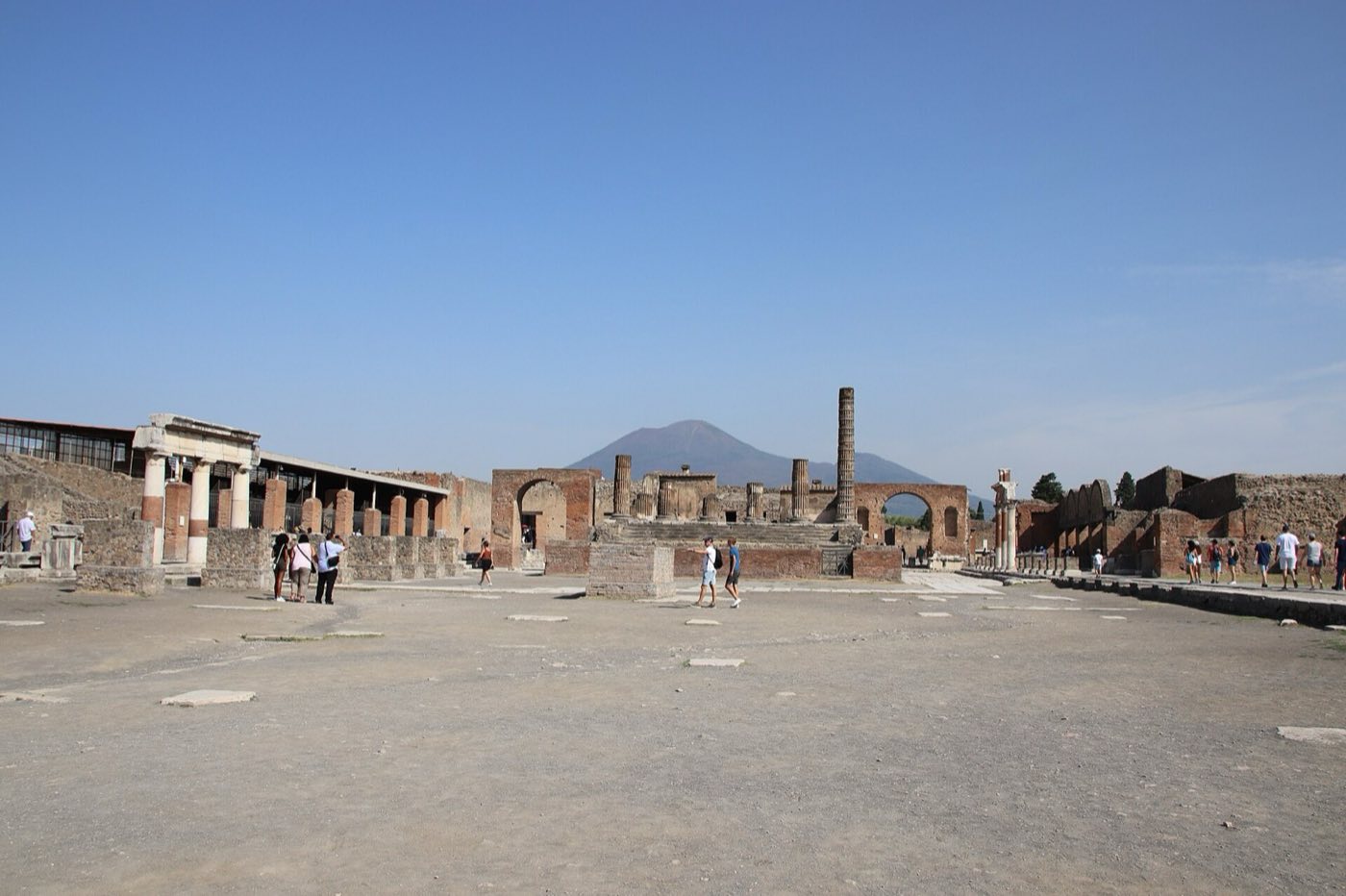
- First visit, one slot, reasonable weather: Pompeii. The forum with Vesuvius behind it is the image you came for.
- July–August afternoon, kids, or limited mobility: Herculaneum. Smaller, shadier, flatter and just as vivid.
- Second visit or a two-day stay: both — our day trips hub shows how to sequence them.
- Doing Vesuvius the same day: Herculaneum pairs better — the crater shuttle leaves from Ercolano, so ruins and volcano share one station.
Getting up Mount Vesuvius: how crater access works
The crater rim is inside Vesuvius National Park and access is ticketed, capped and timed — in summer, buy the park entry online before you travel (around €10–12; check the official park site for current rates). No train goes up the mountain. Here's the chain for independent visitors:
- Circumvesuviana to Ercolano Scavi. About 15–20 minutes from Naples on the Sorrento line, and the standard jumping-off point for the volcano.
- Shuttle bus up the mountain road. Operators outside Ercolano Scavi station run shuttles to the car park at roughly 1,000 m altitude; buses also run from Pompeii in season. Expect around €10–20 return depending on operator — confirm times for the last bus down before you board.
- Walk the final stretch. From the car park it's a 25–30 minute climb on a wide gravel switchback to the rim — around 200 m of ascent. Fine for anyone reasonably fit, rough for flip-flops.
- The rim itself. You walk a section of the crater edge with steam vents below and, on a clear day, the whole Gulf of Naples in one view. Allow 45–60 minutes up top.
Guided combo tours compress all of that into a single vehicle and usually include the park ticket — which is why combos beat DIY for the crater day, even for confirmed independents.
Timing is everything
- Enter Pompeii at opening or after 14:30. The 10:00–13:00 window absorbs every coach tour from Naples, Rome and the cruise port at once. Early entry gives you two quiet hours; late entry gives softer light and emptier streets.
- Best months: April–June and September–October. Warm enough, bright enough, survivable at 15:00.
- July–August: go at opening, be done by 13:00, or switch your ruins slot to Herculaneum. The site regularly tops 35°C with zero shade on the main streets.
- Best light for photos: late afternoon, when the low sun hits the forum colonnade and Vesuvius turns purple behind it. For the crater, mornings are statistically clearer — haze builds over the gulf after midday.
- Avoid the free first Sunday of the month unless the budget demands it; it's the busiest day on the calendar.
- Cruise-ship days spike the crowds mid-morning. If you're visiting from a ship yourself, our Naples cruise port guide covers what realistically fits in a port day.
How to save on Pompeii & Vesuvius
- Under-18s enter Pompeii free and EU citizens aged 18–25 pay a reduced rate at state sites — bring ID, and check pompeiisites.org for the current scheme.
- The Campania Artecard includes Pompeii and Herculaneum among its sites plus regional transport — often the cheapest route if you're also doing MANN and other museums. We run the numbers in our Artecard guide.
- Visit MANN before or after. The best mosaics and frescoes from Pompeii live in the Museo Archeologico Nazionale di Napoli, not at the site. Pairing the two (see our Naples museums guide) doubles the payoff of the same entry money.
- Book the train-based guided tour, not the minivan, if a guide is all you want — the train format is usually the cheapest guided option because nobody's paying for a coach.
- Free cancellation is standard on most GetYourGuide listings up to 24 hours ahead — book early for the slot, cancel later if plans change.
- Skip the "official guide" hustle at the gate. Licensed guides there are legitimate but pricier than pre-booked group tours; unlicensed hangers-on are not worth any price.
How to get there from Naples
To Pompeii: the Circumvesuviana (Sorrento line) from Napoli Porta Nolana or Napoli Garibaldi — the lower level of Napoli Centrale — to Pompei Scavi – Villa dei Misteri takes about 35–40 minutes and drops you 100 m from the Porta Marina entrance. Trains run every 20–30 minutes; buy a return ticket in the morning to skip the afternoon queue. The seasonal Campania Express uses the same line with fewer stops and guaranteed seats for a few euros more. Trenitalia regional trains reach Pompei's town station instead — a 15-minute walk to a secondary entrance, useful when the Circumvesuviana strikes (it happens).
To Vesuvius: Circumvesuviana to Ercolano Scavi, then a shuttle up to the 1,000 m car park, then the walk to the rim, as above. There's no rail alternative for the mountain road.
Watch your pockets on the Circumvesuviana. It's a crowded commuter line and the Naples–Pompeii stretch is a known pickpocket workplace; keep bags in front of you. More regional transport detail lives in our getting around Naples guide.
Heat, water, shoes: the survival kit
More Pompeii days are ruined by logistics than by crowds. From May to September the site is an unshaded lava-stone grill, and the drinking fountains inside — Pompeii's one great free amenity — are easy to miss.
- Carry a refillable bottle and top up at the fountains inside the site. Vendors at the gate charge tourist prices for the same water.
- Wear real shoes. Pompeii's streets are rutted basalt slabs and stepping stones; the Vesuvius path is loose volcanic gravel. Sandals survive neither.
- Hat and sunscreen are non-negotiable June–September. There is effectively no shade along the main streets.
- Bring layers for the crater. The rim sits at ~1,200 m and is reliably windier and 5–10°C cooler than the coast, even in August.
- Large bags aren't allowed inside Pompeii — there's a free cloakroom, but travel light.
Pompeii & Vesuvius vs the other day trips
With one free day from Naples, this is the history choice: Capri is the sea-and-scenery day, the Amalfi Coast is the villages-and-views day, and the Royal Palace of Caserta is the indoor-splendor day — worth remembering as the rain plan, since Pompeii in a downpour is miserable. Most first-timers with two days pair Pompeii & Vesuvius with either Capri or the coast, and the pairing works because this day is done by 17:00.
FAQ: Pompeii & Vesuvius from Naples
How do I get from Naples to Pompeii by train?
Take the Circumvesuviana line toward Sorrento from Napoli Porta Nolana or the lower level of Napoli Centrale (Napoli Garibaldi) and get off at Pompei Scavi – Villa dei Misteri, right by the site entrance. The ride takes roughly 35–40 minutes. Trenitalia's Campania Express and regional trains to Pompei town are alternatives, but the Circumvesuviana stop is closest to the ruins.
Is Pompeii or Herculaneum better?
Pompeii is bigger and gives you a whole Roman city — forum, amphitheater, streets, villas. Herculaneum is smaller, better preserved, shadier and takes about 2 hours instead of 4+. First visit with time for only one: Pompeii. Short on time, traveling in peak heat, or on a return trip: Herculaneum.
Can you visit Pompeii and Vesuvius in one day?
Yes. Do Pompeii in the morning (3–4 hours), then reach the Vesuvius crater in the afternoon, or book a combo tour that handles the transport between the two. DIY, the awkward link is the stretch between Pompeii and the crater road — buses exist but schedules are thin, which is why combos are popular.
How do you get to the Vesuvius crater?
Vehicles stop at a car park around 1,000 m altitude; from there it is a 25–30 minute uphill walk on a gravel path to the crater rim. Most independent visitors take the Circumvesuviana to Ercolano Scavi and a shuttle bus up the mountain road. The crater is part of Vesuvius National Park and requires a timed entry ticket — book it online in summer.
How much does Pompeii cost?
Standard adult entry is around €18–22 depending on ticket type, with EU youth discounts and free entry for under-18s — check the official Pompeii site (pompeiisites.org) for current prices. Vesuvius National Park entry is roughly €10–12 extra. Guided tours from Naples with entry and transport included are typically €70–130 per person, as listed on GetYourGuide.
Is Pompeii free on the first Sunday of the month?
Yes — like Italy's other state museums, Pompeii traditionally opens free on the first Sunday of each month. It is also the most crowded day imaginable and timed slots go fast. If your dates are flexible, a normal weekday morning is a far better visit.
How long do you need in Pompeii?
Three to four hours covers the highlights: the forum, the amphitheater, the Lupanar, House of the Vettii area, and a walk along Via dell'Abbondanza. Archaeology enthusiasts can fill a whole day. With a guide, two hours gives you more understanding than four hours wandering alone.
Is Vesuvius safe to climb?
Yes — Vesuvius is continuously monitored by the Osservatorio Vesuviano and the trail to the rim is a managed national park path. The practical risks are sun, wind and loose gravel, not eruption. The park closes the trail in bad weather, so check conditions before you commit to the trip up.
Pompeii and Vesuvius from Naples reward exactly the preparation this page describes: book timed entry, take the early train or the guided walk, carry water and real shoes, and decide in advance whether the crater is part of the day. Do that, and you get the rarest kind of famous sight — one that's better in person than in the photos.